Harry W. Crosby, renowned historian, photographer, explorer, and author, passed away on September 12th, 2024, at the age of 98. His death marks the end of a remarkable life that significantly impacted the understanding of Baja California’s history, landscapes, and indigenous cultures. Known for his deep love of the Baja Peninsula, Crosby spent decades exploring and documenting its hidden treasures, from forgotten missions to the lives of its early inhabitants.
A Lifelong Passion for Baja California
Harry Crosby’s connection to Baja California began in the mid-1960s, but his deep fascination with the region was sparked even earlier. Crosby’s first exposure to the peninsula came in 1963 when he traveled there as a schoolteacher from San Diego, leading a student trip organized by the San Diego Natural History Museum. This initial visit would plant the seeds of a lifelong relationship with the land and its people.
Soon after, Crosby embarked on his first of many expeditions into the heart of the Baja California Peninsula. He explored remote regions that few foreigners had ventured into before. His trips were often physically demanding, taking him across rugged terrains by mule, horseback, and foot, as he delved into the mysteries of Baja California’s pre-colonial and colonial history. Over time, he established himself as a trusted chronicler of the peninsula’s past, unearthing historical gems, many of which had been lost to time.
Crosby’s first published work on Baja California, “The King’s Highway in Baja California,” came out in 1974. This detailed study of the Spanish El Camino Real, the road connecting the peninsula’s 18th-century missions, catapulted him to prominence as an authority on the region’s history. However, this book was only the beginning. It was soon followed by several other publications, each focused on different aspects of the peninsula’s rich heritage.
Baja California’s Rock Art: Crosby’s Greatest Discovery
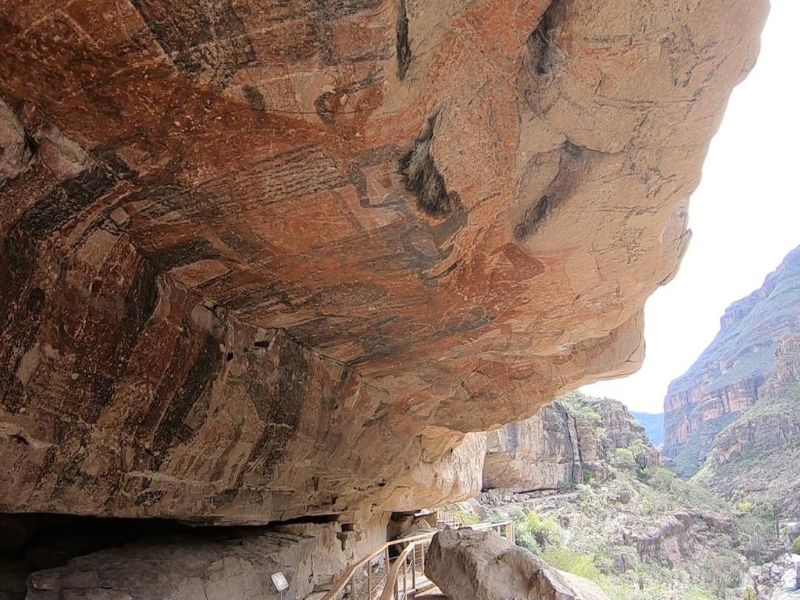
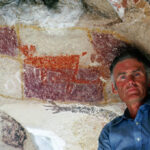
One of Harry Crosby’s most significant contributions to Baja California’s historical record was his exploration and documentation of the Great Murals of Baja California. These prehistoric rock paintings, found in the isolated canyons of the Sierra de San Francisco and the Sierra de Guadalupe, were largely unknown to the outside world until Crosby’s research brought them to international attention.
In 1972, Crosby set out on an expedition to explore the ancient cave paintings, which are thought to have been created by the indigenous Cochimí people between 1000 BC and 1300 AD. His dedication to uncovering these prehistoric works of art was remarkable, as the cave paintings were located in some of the most remote and rugged parts of the peninsula. Many of these murals are accessible only on foot or mule, and the harsh desert climate added further challenges to the expeditions.
Crosby’s book “The Cave Paintings of Baja California: Discovering the Great Murals of an Unknown People” (1997) is considered the definitive work on the subject. The book not only offers detailed descriptions of the cave paintings themselves but also includes stunning photographs that capture the grandeur of the murals in all their glory. Through his meticulous documentation, Crosby played a pivotal role in securing the recognition of these cave paintings as a UNESCO World Heritage Site in 1993. Today, the murals remain a source of fascination for archaeologists, historians, and travelers alike, thanks in large part to Crosby’s pioneering work.
The Explorer’s Lens: Capturing the Peninsula Through Photography
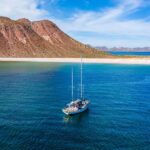
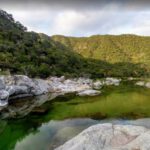
As an accomplished photographer, Harry Crosby had a unique ability to capture the landscapes and people of Baja California in their most authentic form. His photographs convey the stark beauty of the peninsula—its towering mountains, endless deserts, and rugged coastline. But more than just beautiful imagery, Crosby’s photographs serve as a visual record of the region’s cultural and historical evolution.
His photographs of the cave paintings, the missions, and the indigenous peoples of Baja California are widely regarded as masterpieces of documentary photography. Crosby’s work stands out for its emotional depth, as he sought not only to depict the visual grandeur of the peninsula but also to communicate the sense of wonder and discovery that he felt during his explorations. His images have been published in books, exhibited in galleries, and continue to serve as important historical documents for those studying the peninsula.
In books like “Tijuana 1964: A Photographic and Historical Essay” and “Gateway to Alta California: The Expedition to San Diego, 1769,” Crosby combined his skills as a photographer and historian, blending rich visual storytelling with detailed research. These works have been praised for offering a multifaceted view of the history of Baja California, combining academic rigor with artistic vision.
In books like “Tijuana 1964: A Photographic and Historical Essay” and “Gateway to Alta California: The Expedition to San Diego, 1769,” Crosby combined his skills as a photographer and historian, blending rich visual storytelling with detailed research. These works have been praised for offering a multifaceted view of the history of Baja California, combining academic rigor with artistic vision.
The Missions of Baja California: Preserving Religious Heritage
Another aspect of Baja California’s history that captured Crosby’s attention was the chain of Spanish missions established by Jesuit, Franciscan, and Dominican missionaries in the 17th and 18th centuries. As a historian, Crosby was fascinated by the missions’ role in the spread of Spanish colonial influence across the peninsula, and he set out to document their history and legacy.
His book “Antigua California: Mission and Colony on the Peninsula Frontier, 1697–1768” provides an in-depth account of the establishment and development of these missions, shedding light on the challenges faced by both the missionaries and the indigenous populations they sought to convert. Crosby’s research into the missions not only contributed to our understanding of their historical significance but also helped to preserve these important cultural landmarks.
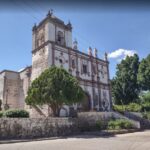
The missions of Baja California Sur, such as Misión de Nuestra Señora de Loreto Conchó and Misión San Javier, are now popular tourist destinations, attracting visitors who are eager to learn about the region’s colonial past. Crosby’s work was instrumental in bringing attention to these historic sites, and his detailed writings continue to serve as a valuable resource for travelers and historians alike.
A Legacy of Exploration and Preservation
Throughout his life, Harry W. Crosby was driven by a deep sense of curiosity and a profound love for the landscapes and cultures of Baja California. His work as a historian, photographer, and explorer has had a lasting impact, not only in terms of academic research but also in the way people experience and appreciate the region today. His dedication to documenting Baja California’s history and natural beauty helped to raise awareness about the need to protect these irreplaceable cultural and environmental treasures.
As an advocate for the preservation of Baja California’s historical and natural sites, Crosby emphasized the importance of responsible tourism and environmental stewardship. His legacy continues to inspire those who are passionate about preserving the peninsula’s rich heritage for future generations. Today, adventurers, historians, and photographers who explore Baja California often follow in Crosby’s footsteps, using his work as a guide and inspiration.
Honoring Harry Crosby's Legacy
Harry Crosby’s contributions to the history and culture of Baja California are monumental. His work has left a profound legacy that continues to shape our understanding of the region, and his passion for exploration and discovery resonates with anyone who has ever been captivated by Baja California’s rugged beauty.
As we remember and honor Harry Crosby, it is important to continue his mission of preserving and protecting the rich heritage of Baja California. His life’s work serves as a reminder of the power of exploration and the importance of documenting and cherishing the world’s hidden treasures.
For those who have yet to experience the magic of Baja California, Crosby’s books, photographs, and legacy provide a roadmap to one of the most fascinating and underexplored regions in North America—a land of ancient cave paintings, colonial missions, and stunning natural beauty that continues to capture the imaginations of adventurers and historians alike.